


Vietnamese vs Japanese Head Spa: What’s Actually Different
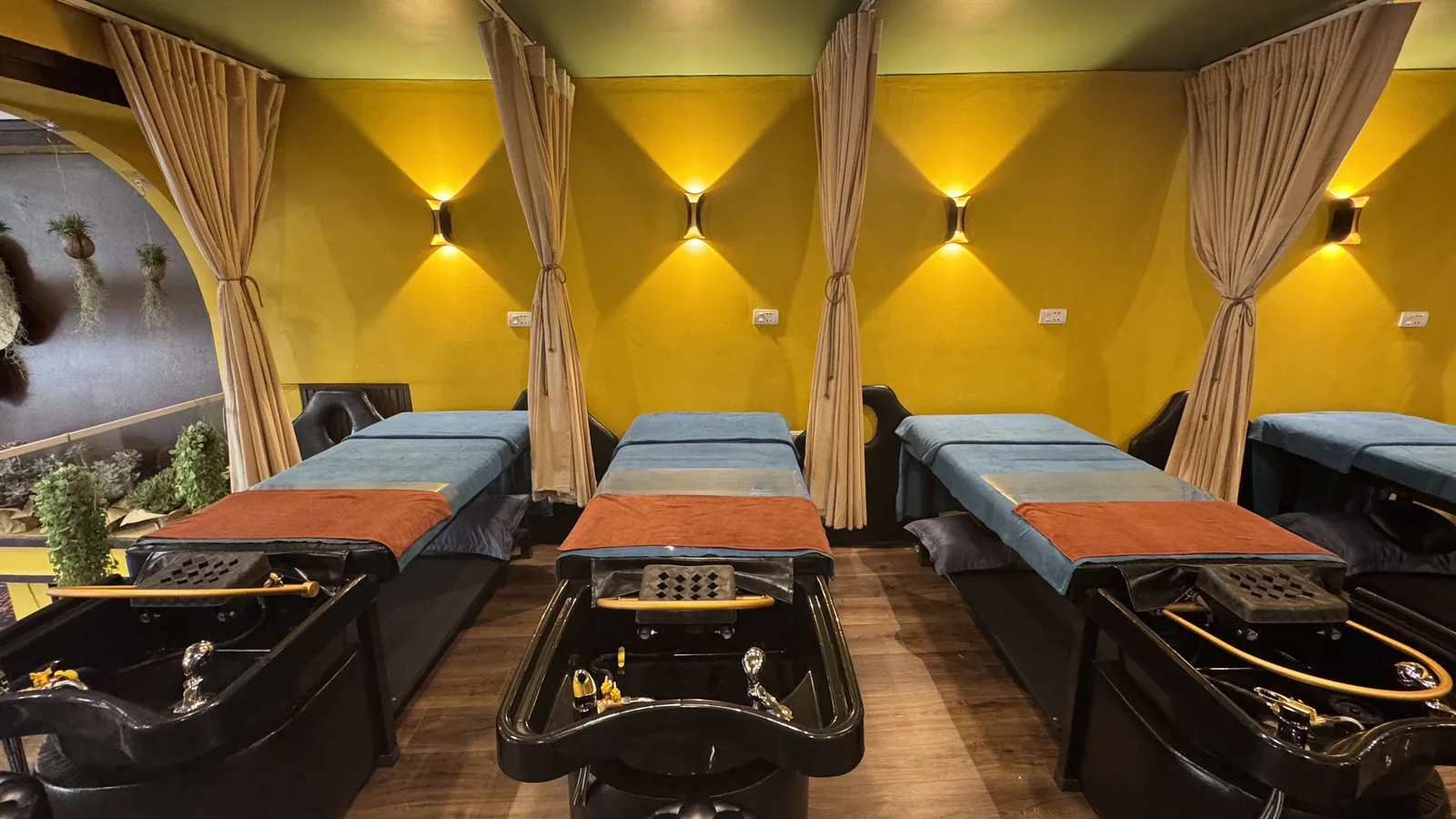
In short
Japanese head spas are built around water and the scalp: softened or carbonated water, often a shower arm or water dome, careful scalp cleansing. Vietnamese head spas are built around herbs and hands: a long wash with brewed plants like soapberry, then a massage that travels into the neck and shoulders. Both relax you. They feel different.
| Japanese style | Water-led, scalp-focused, precise; often a scalp check first |
|---|---|
| Vietnamese style | Herb-led, massage-heavy, reaches neck and shoulders |
| Typical length | Both 45–90 minutes |
| In Hanoi | Both are available; Vietnamese herbal head spas are easier to find in the Old Quarter |
| At Nàng Tấm | Vietnamese style only, from 350.000₫ for 45 minutes |
Why the comparison comes up at all
Head spa videos travel fast, and many of the most viewed come from Japan: a guest under a gentle arc of water, a quiet room, close-ups of a clean scalp. Visitors arrive in Hanoi, see “head spa” on every other shopfront, and reasonably ask whether it is the same thing. Some spas here describe themselves as Japanese-inspired or Korean-standard; others, like us, are Vietnamese in method. Neither is better. It helps to know which one you are walking into.
Where each tradition comes from
The Japanese head spa grew up inside hair salons, as a premium scalp treatment. Its language is that of hair care: cleansing the scalp, clearing oil, improving the feel of the hair. Salons invested in equipment to match, and some use soft or carbonated water, a scalp camera, or a curved water dome that rinses the head evenly.
The Vietnamese head spa grew up from the home. Northern families washed hair with boiled herbs, especially bồ kết, the soapberry pod, long before bottled shampoo arrived. Neighbourhood hair-wash shops turned that into a reclining wash with a massage, and wellness spas extended it into a ritual. Its language is that of rest: warmth, scent, pressure, time.
Water versus herbs
This is the clearest difference you will feel. In a Japanese-style head spa the water itself is the treatment: its temperature, its softness, the way it moves across the head. In a Vietnamese head spa, the water is a carrier for plants. It is brewed, it smells of something, and it goes over the hair slowly, many times.
At Nàng Tấm the herbal water is made each morning from soapberry, young pomelo, goosegrass, ginger and mugwort. A soapberry lather is light and slightly smoky; young pomelo leaves a clean citrus note that guests notice on their hair the next day.
Pressure and massage
Japanese head spas tend to concentrate on the scalp with precise, rhythmic finger pressure. Vietnamese head spas usually spend more time on massage overall, and the hands do not stop at the hairline: the temples, the base of the skull, the neck and the tops of the shoulders all get attention. If your tension lives in your shoulders rather than your scalp, that matters.
Either way, you set the pressure. Ask for lighter or firmer whenever you like.
Side by side
| Japanese-style head spa | Vietnamese herbal head spa | |
|---|---|---|
| Centre of the treatment | Water and scalp | Herbs and massage |
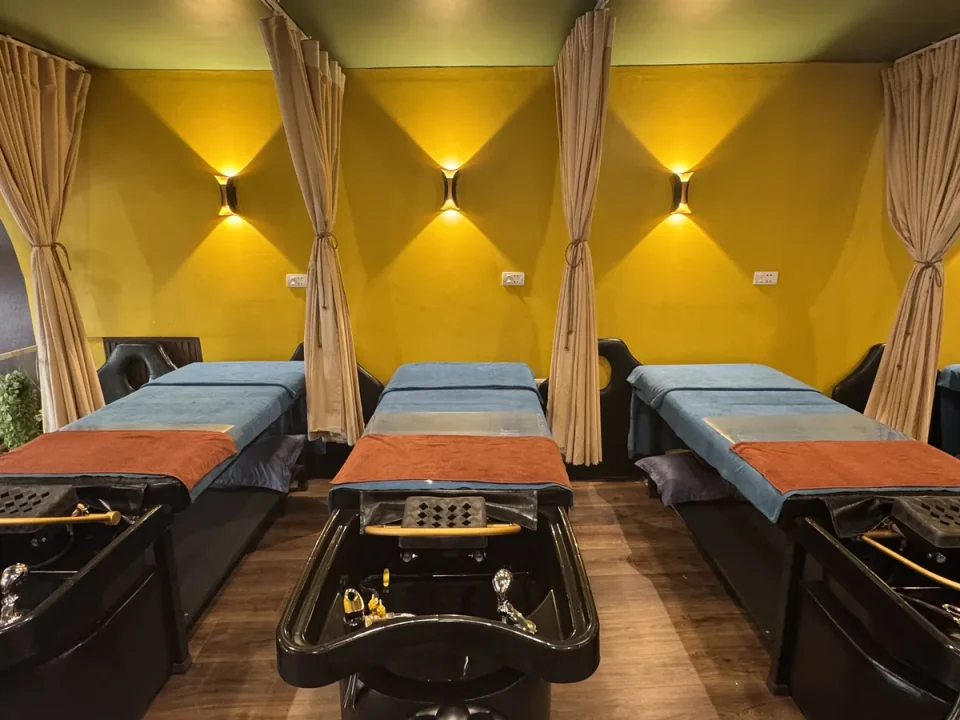
| Typical tools | Shower arm or water dome, scalp camera in some salons | Wash basin, brewed herbal water, hands; sometimes jade or warm compresses |
| Massage reaches | Mostly the scalp | Scalp, neck and shoulders |
| Scent | Products chosen by the salon | The herbs themselves |
| How it feels | Precise, clinical in a pleasant way, very clean | Warm, slower, more like being looked after at home |
Which to choose in Hanoi
Choose a Japanese-style head spa if your main interest is your scalp and hair, you love the feel of water, or you already have a favourite at home and want the same here. Choose a Vietnamese herbal head spa if you want something you could only have in Vietnam, if your neck and shoulders are the problem, or if you want an hour that smells of plants rather than products.
If you are new to both, the Vietnamese version is a gentle place to start. A 45-minute Gội Mây is enough to know whether you like it; a 75-minute Nghi Lễ Lá adds a soapberry and goosegrass hair soak and a jade gua sha around the eyes.
Questions guests ask
Is a Vietnamese head spa the same as a Japanese head spa?
No. Both are long, relaxing hair washes, but Japanese head spas centre on water and scalp care, while Vietnamese head spas centre on brewed herbs and a longer massage of the head, neck and shoulders.
Which is more relaxing?
It depends where you hold tension. If it is your scalp, either works. If it is your neck and shoulders, the Vietnamese style usually reaches further.
Can I find a Japanese head spa in Hanoi?
Yes, several spas in Hanoi offer Japanese-style or Japanese-inspired head spas. Nàng Tấm offers the Vietnamese herbal style only.
Details checked on 6 November 2026.
Treatments mentioned
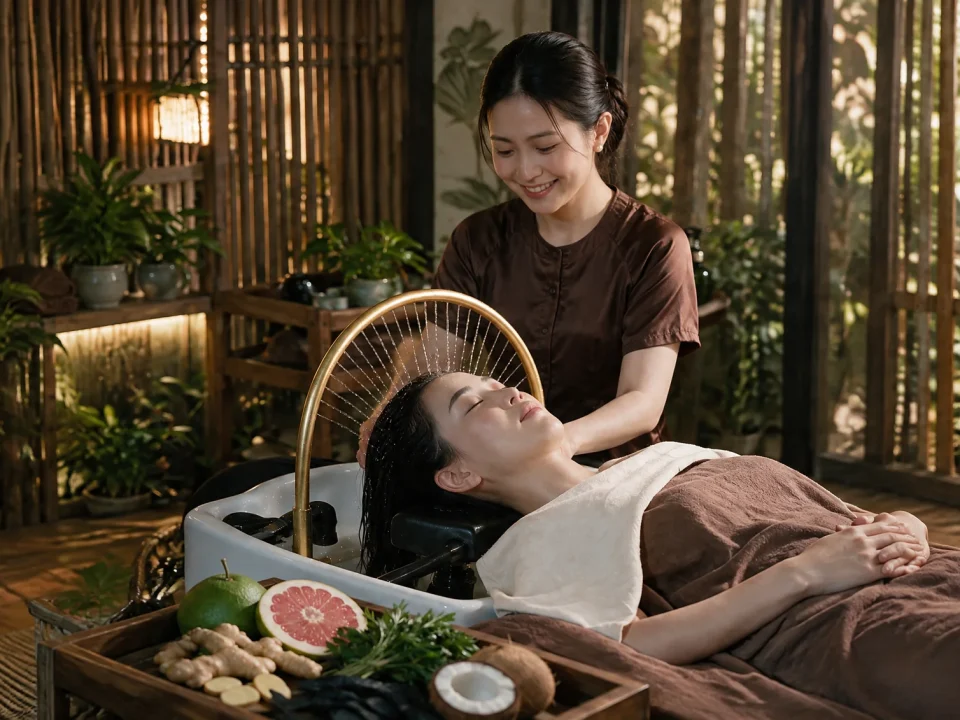
Incense welcome, scalp scrub, wellness wash, soapberry and goosegrass hair soak, gua sha eye therapy with Vietnamese coconut oil.
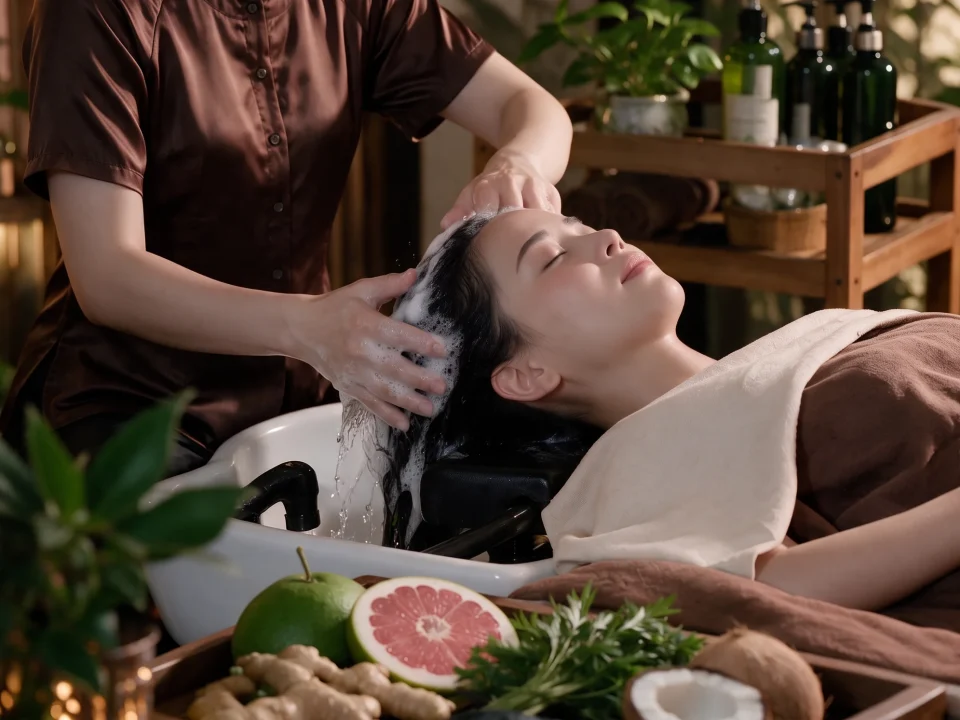
Scalp detox scrub and a fragrant wash with young pomelo oil.
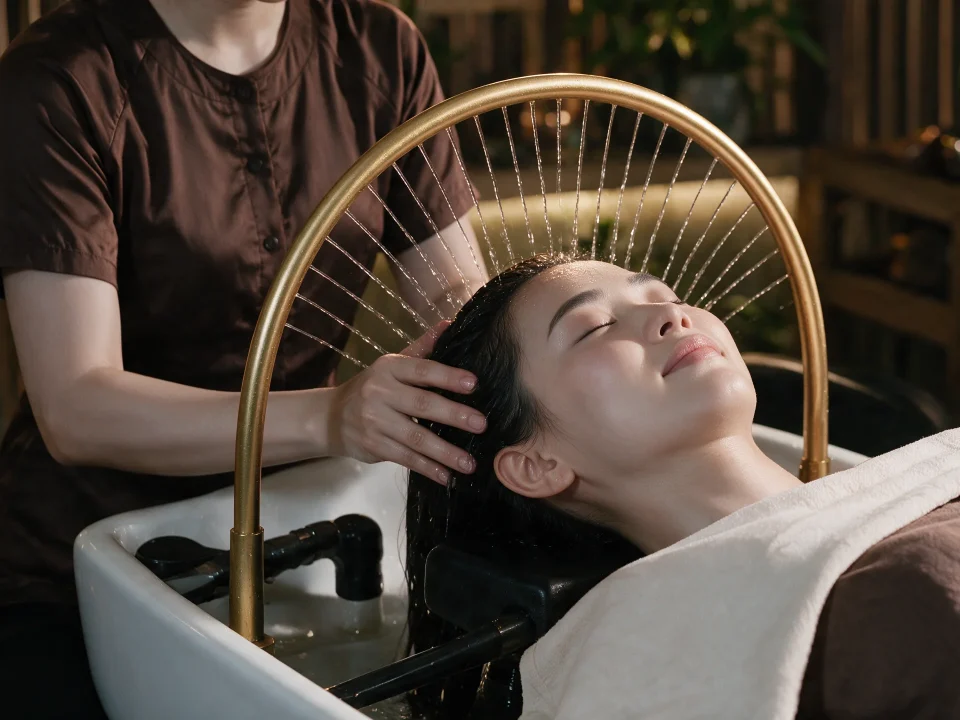
Warm-ginger scalp renewal, wellness wash, herbal hair soak, jade and coconut-oil facial, mugwort warm compress on back and shoulders.
Walk-ins are welcome; evenings fill up first. Book online in a minute, or message us and we reply within the hour.
Guides you may like
Vietnamese vs Japanese Head Spa: What’s Actually Different
Japanese head spas centre on water and scalp care; Vietnamese head spas centre on herbs and hands. How they differ in feel,…
Your First Head Spa in Hanoi: What to Expect, Step by Step
What to wear, what to say, how long it really takes and how to pay. A calm walk-through of a first Vietnamese…